If the "physics" tells you that your satellite cannot radiate heat away from your nVidia GPU cluster because each H100 needs 1.1 meter square of radiator, then opinions do not matter. The same applies to power supply and bandwidth.
> Another way to think about it: An SSPP spacecraft with a 60-meter-by-60-meter surface area made using today’s space PV-cell technology would cost $36 million and weigh nearly 9,000 pounds, or almost as much as a Ford F-450 truck. With the ultra-lightweight PV-cell technology Atwater envisions, it would cost just $450,000 and weigh about 300 pounds, or about as much as an IKEA three-seat sofa
That’s megawatt-level solar power under 5 tons using today’s leading edge technology. Starship super heavy can launch 100 tons into LEO.
As to bandwidth, Starlink V3 backhaul capacity is 1 terabit. Microwave radio frequencies have an insane amount of bandwidth.
The Caltech Concept is just that — a concept. No prototype, no tests, no manufacturing, no results. When they achieve this order of magnitude improvement on a prototype scale, that's when we should take them seriously.
ISS today generates and radiates away about 120 KW of energy with its old tech 3250 sq m of panels panels and it's current radiators. That's what 3 H100 racks need
There may be an economic challenge - which seems to be the sort of problem mass manufacturing can solve very well.
There may be a compute model & latency problem, how do you organize model training when racks are much further apart than in traditional data centres (although speed of light is 50% faster in vacuum than glass fibre). But that's algorithms.
Relative to everything else in orbit, powering a rack of compute and some comms per satellite seems not really to be a physics problem.
The cost of replacement is exorbitant for commercial usecases, but is acceptable for defense usecases.
The issue is too many people are looking at the commercial usecase while ignoring the defense usecase that is what is actually driving the conversation and dealflow in this segment.
First, it assumes the radiator is at the same temperature as the GPU. But radiators become dramatically more effective as temperature increases, with radiated power increasing as the fourth power of absolute temperature. So a heat pump that drives the radiator at higher temperature could make the radiator far smaller. More power would be required (and the radiator would have to radiate this energy too) but the radiator could become much smaller.
The other problem is assuming the radiator is intercepting sunlight. But it can be shaded by reflective films or kept edge-on to the Sun.
> Ok, there are at least two bad assumptions there.
> First, it assumes the radiator is at the same temperature as the GPU. But radiators become dramatically more effective as temperature increases, with radiated power increasing as the fourth power of absolute temperature. So a heat pump that drives the radiator at higher temperature could make the radiator far smaller.
Carnot's theorem and refridgeration cycles rear their head. Your heat pump still needs power to pump heat uphill., negating any savings from a smaller radiator. And what happens when you shrink a radiator? It becomes a high temperature radiator, meaning the GPU must operate outside its operational tmperature of about 70 degrees C. So small radiator = big pump + extra solar panels and batteries + dead GPU
Also, how do you deal with the added cost and complexity for the solar tracking mechanisms for the "edge-on-to-the-Sun" radiator?
>Also, how do you deal with the added cost and complexity for the solar tracking mechanisms for the "edge-on-to-the-Sun" radiator?
Almost every satellite needs attitude control, so this isn't something out of the ordinary. I'm not sure solar tracking mechanisms really fall into the "expensive" or "complex" categories in 2026.
It's not just space, it's mass. A solar panel can be made very low in mass. The physical limit comes from the absorption of light in a thin layer of semiconductor. For CdTe, this would be about 1 micron. PV in space could be gossamer thin sheets of thin film semiconductors, with tremendous power/mass.
> Carnot's theorem and refridgeration cycles rear their head. Your heat pump still needs power to pump heat uphill., negating any savings from a smaller radiator. And what happens when you shrink a radiator? It becomes a high temperature radiator, meaning the GPU must operate outside its operational tmperature of about 70 degrees C.
Sorry, that's all nonsense. Yes, the extra power needs to be radiated. But the advantage of operating at high temperature is so extreme that the more effective radiation will overwhelm that unless the heat pump is extraordinarily inefficient. If the heat pump would be perfect, operating at the Carnot limit, then if it doubled the absolute radiator temperature it would double the amount of energy to be radiated, but the area of the radiator would decrease by a factor of (2^4)/(2) = 8.
As for the second point, no, this does not require the GPU to operate at higher temperature. What made you conclude it would?
> Also, how do you deal with the added cost and complexity for the solar tracking mechanisms for the "edge-on-to-the-Sun" radiator?
I don't need to; I'm just debunking a bad argument. What you are doing there is called "moving the goalposts". But satellites normally have means of orienting PV toward the Sun. So, maybe have the radiator perpendicular to those? Those claiming the idea violates the laws of physics and using solar absoption on the radiator as part of the argument need to show no such scheme can work, even in principle.
Could you please stop breaking the site guidelines? Your account has been posting flamebait lately, and here you crossed into personal attack. Not cool. You can make your substantive points without any of that.
When someone else is wrong (or you feel they are), two options that work are to continue to respectfully provide correct information, or to stop replying. Getting into denunciation, spats, etc. is not a good option.
The numbers are easy to run, and the added power consumption is no joke. It’s even worse if your heat pump fails to achieve Carnot efficiency. Never mind that heat pumps can be heavy and may be completely destroyed by even a tiny micrometeoroid strike.
Yes, it needs more solar power. But solar panels should be much lighter than radiators, potentially vastly lighter. Even if Carnot efficiency is not approached there is plenty of room for improvement in the size of the radiators.
The other neat thing is that in space, the background temperatures are a lot lower than Earth due to lack of atmosphere, and available potentially more often than 1/2 the day cycle depending how high you're prepared to orbit.
This borders on science fiction. 88,000-and 1-million satellite clusters (as claimed in your link) are hard to take seriously, especially with the possibility of Kessler Syndrome. Also:
1. How do you cool your chips? Vacuum is a thermal insulator, so radiators are required to remove heat. nVidia (or even ASICs) require much and specialised cooling.
2. How does one radiation harden a H100?
3. I'm also seeing where TCO for these are 78x their terrestrial equivalents [0]. Is that financial sustainable?
And there still remain issues with power supply, regulations, and bandwidth. This feels more like a thought experiment rather than an actual serious engineering or business case.
The projections are questionable, but this is something the US and China are experimenting with as well.
1 and 2 are still open questions, but these are not aimed to be commercial grade DCs - this is basically edge compute (think a handful of racks). 3 is not a problem for defense usecases. (EDIT: Discussion here seems to point out that data OP is using might be flawed [1]).
Ignoring the fact that just about every orbital data center startup in the US is funded by IQT and China's CMF has been doing something similar is bad from a defense perspective.
Based on dealflow, these aren't being targeted for consumer usecases in the short-term and whoever has been saying that is misleading.
> especially with the possibility of Kessler Syndrome...
India, Russia, China, and the US don't care about Kessler Syndrome - they have already launched and deployed ASATs. This also comes after India and China had a near collision in 2024 that was treated as an offensive action [0].
Cost is the critical constraint for defense programs. Yes, militaries spend a shit-ton of money, but that's usually in a penny wise and pound foolish way. A dollar spent on your project is a dollar that's not spent on the innumerable things generals think are critical to their future wars like boondoggles, missiles, planes, ships, missile defense systems, etc.
The exception is if you're one of those rare projects. A starlink type constellation or launch capabilities certainly could be, but it's hard to imagine generals getting excited about compute in space just for the sake of it.
This reminds me of the railgun. Basic math and physics tells us that not only would the (very expensive) barrels wear out very quickly, but that it would have had to be fitted on on a nuclear-powered pocket battlecruiser.
Worse, the technology for firing any meaningful payloads from an electric gun (8" Small Diameter Bomb equivalents, guided, airburst, incendiary) simply does not exist.
Same as with Musk's California Vacuum Tunnel (which diverted attention from passenger rail). And his Neuralink. In the 1980s, it was nuclear pumped space-based lasers and Soviet particle beam weapons.
All of the above can be debunked with 2 years undergrad physics and a Casio calculator. Yet they were still taken seriously by high-level politicians and business, some of whom were deeply connected with the military-industrial complex.
People have shrugging of questions like 1 and 2, only for 3 to hit them very hard. But we will see if they can launch 600 of these satellites as they claim.
Carnot's theorem and refridgeration cycles rear their head. Your heat pump still needs power to pump heat uphill., negating any savings from a smaller radiator. And what happens when you shrink a radiator? It becomes a high temperature radiator, meaning the GPU must operate outside its operational tmperature of about 70 degrees C. So small radiator = big pump + extra solar panels and batteries + dead GPU
Also, how do you deal with the added cost and complexity for the solar tracking mechanisms for the "edge-on-to-the-Sun" radiator?
Yes, that was your response. It was a terrible and obviously invalid response, as I explained.
You never explained why the GPU temperature had to increase. Could you explain that now? The GPU would be on the cold side of the heat pump, not the hot side.
> Also, how do you deal with the added cost and complexity for the solar tracking mechanisms for the "edge-on-to-the-Sun" radiator?
We ignore that issue, because we were debunking a bad argument about "the laws of physics". The laws of physics say nothing about budgets or complexity.
I can’t imagine how inefficient a country would be if they tamped down all their magical thinking. FFCS, SMILE, and EUVL are all magical thinking if you ask me. Some of the craziest things humans have ever conceived of.
Full-flow staged combustion is a rather logical - and not even particularly useful, we're talking about small percentage points - extension of staged flow combustion, and staged combustion is a rather obvious change to open-cycle schema - and I'm hyperbolizing just a little bit here.
Yes, it brings effects, and it's a cool technology. But saying that at least idea - or results - are fundamentally changing rocket engines... I think that's a stretch.
There’s nothing logical about trying to make non-oxidizing metal that can handle thousands of degrees of temperature, hundreds of bars of pressure, and a nearly pure-oxygen environment? The US essentially made fun of the Soviets for even trying. If you think it’s logical, you don’t understand the tech at all. It’s a borderline miracle, let alone simply “logical”.
Literal rocket scientists spent decades and careers saying it was a waste of time, and random people with zero expertise try to downplay it. I’ll never understand being THIS cocky is a subject one has clearly never touched.
Soviets were world leaders in liquid fuel rocket engines. They used oxygen-rich preburners in e.g very successful line of engines starting with RD-170. It was possible decades ago. And no downplaying.
It doesn't have to be modern to be a miracle. The steam engine is one, too! I think this is still true of FFCS rockets, but maybe we're just wondering at different things in this world :)
> 1. How do you cool your chips? Vacuum is a thermal insulator, so radiators are required to remove heat.
This is space 101 and honestly, at this point, I consider bringing this up as disqualifying from giving criticism on the topic.
> nVidia (or even ASICs) require much and specialised cooling.
Whatever. They generate N kW of heat, you need to shed N kW of heat, and you need to fit that within your budget. End of worry.
Pro tip: if you can slice your problem so that individual satellite needs to shed less than M kW of heat, where M corresponds to how much heat some existing, deployed satellite platform handles, you can just do your initial design around that satellite platform, replacing the "business payload" with yours.
This is e.g. how the unfairly criticized recent "satellite swarm TPUs" paper from Google handled it. Everyone who brought up cooling revealed themselves as not having read the first page and not having thought about it seriously for more than 30 seconds.
> 2. How does one radiation harden a H100?
See that paper for some ideas and considerations, as this is part of what they focused on, after solving cooling by sizing the per-satellite payload power needs to Starlink.
Yeah, there's no solution for heat dissolution at this time.
You can run a few cpus in space, you are a few seconds closer to the data to figure out something basic, but you cant do that much calculation. If you do much cpu intensive stuff, you just get hot quickly and you can't dissipate the heat. I'm sure new ways to cool down will be developed, but there's not even any experimental techniques, right?
ISS collects ~250 kW solar power. All of that needs eventually to be dissipated - the energy removed by communication radiowaves is small. ISS routinely handles this thermal question for decades.
There is nothing magical with cooling in space. Just a different environment - a rather well studied already, we send satellites to space for some 70 years almost. Saying there is no solution is incorrect - we have options, we have numbers, we can point to concrete questions and answers.
(1) seems to be the big question to me. Surely it would be much cheaper to simply stick a data centre up in the mountains somewhere, low enough to be fairly easy to reach but high enough to be nice and chilly?
You need your chip to not completely fail. Latch-up can destroy things. A complete failure of a SERDES may dramatically reduce the utility of the whole system.
It is in fact possible to have the Kessler syndrome in LEO, the debris doesn't just immediately fall out of the sky so in practice you just need to put more satellites into a specific orbit to reach the critical density where one satellite breaking leads to a runaway chain reaction.
Can’t two solid object with equal kinetic energy collide in such a way that most of the energy goes into one of them, giving it a velocity that boosts its orbit while the other one has lower velocity and de-orbits?
Or one object explode into two fragments, equal and opposite relative velocity, again pushing the one half into a higher orbit and de-orbiting the other half?
(Honest question, math major, never took orbital mechanics or played KSP much).
> Can’t two solid object with equal kinetic energy collide in such a way that most of the energy goes into one of them, giving it a velocity that boosts its orbit while the other one has lower velocity and de-orbits?
Sure, you can. Imagine shooting a bullet into a tungsten cube. The cube will go into a higher orbit, and the bullet will bounce back (and maybe de-orbit).
But the kicker here is that for this to work, the bullet has to be in a _higher_ orbit than the cube initially. So the end result is still fewer objects in higher orbits.
Another option is momentum transfer via elastic deformation - you shoot a bullet into a 45-degree facet of that tungsten cube, and the bullet then ricochets into a higher orbit. It ultimately works by momentarily storing the energy of the projectile as a plastic deformation of the facet. So it can't accelerate more than a few small fragments.
It is not the pen, it is the pen tip. Ballpoint pen tips are microscopic tungsten carbide ball held inside ultra-thin steel sockets. So you need cutting tolerances precise to 0.001 millimeters. If the socket is a fraction of a micron too loose, the ink leaks. Too tight, and the pen won't write.
I am 47 and ballpoint pens have visibly improved since the 1990s, at least the cheap ones (never had an expensive one). The risk of accidental staining is by now basically zero, it used to be high enough that you avoided putting a pen into your shirt pocket even for an hour.
They do. The micro-precision subculture required to (in order):
1. Powder prep your tungsten carbide
2. Form said powder
3. Thermally prepare the resulting slurry using a vacuum forming furnace
4. Finish it with diamond lap grinders, lapping machines and polishing machines
5. Clean it ultrasonically, with solvent, rinse, then dry them.
6. Have the metrology required to test thousands of micron-scale balls a day (a world-beating skill in itself)
7. Build a QA lab that can assure the quality of said balls statistically (you can test them all).
8. And then integrate them via socket assembly
are not just hereditary, but proprietary. And assuming a competitor does manage to achieve the basic ISO 3290 and ASTM F2094 standards, you still need tacit knowledge. Stuff like sintering temperature curves, proper powder grain distribution, polishing chemistry, proper statistical rejection thresholds and a whole lot more.
And that is just the ball. Not the socket, or the ink channels. Making a perfectly spherical 0.5 mm ± 0.0001 mm tungsten carbide ball requires the same techniques used in building micromotors, medical devices, and semiconductor subcomponent manufacturing. Techniques such as high-volume sorting, advanced powder metallurgy, controlled sintering, and precision machines that operate 24-hour shifts without drifting. All operated by modern process engineers who are the spiritual (or actual?) descendants of Swiss watchmakers or the glassmakers of Murano.
China's ballpoint pen quality as a reflection of manufacturing quality:
"
China's inability to produce a complete, high-quality ballpoint pen came to widespread attention in 2015, when Prime Minister Li Keqiang singled out the products at a seminar in Beijing, noting that his writing was "rough" when he used Chinese-made ballpoint pens. For Li, China's failure to manufacture a complete ballpoint pen was indicative of the Chinese economy's weaknesses. "That's the real situation facing us," Li said at the time. "We cannot make ballpoint pens with a smooth writing function."
"
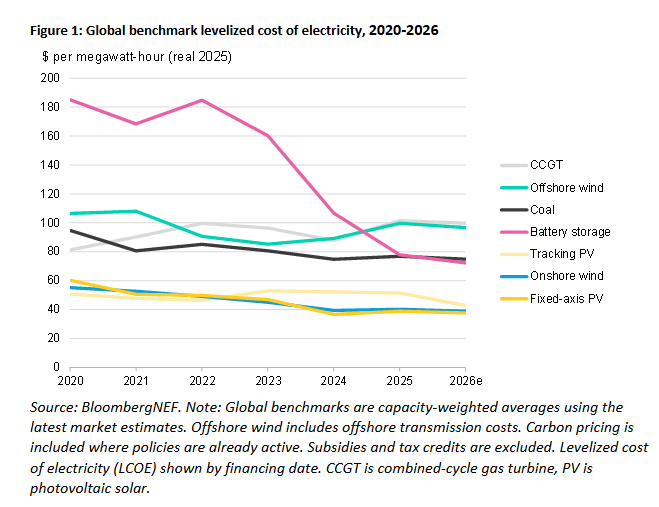
By that logic solar power should also be banned, due to the amount of coal required per panel (0) both for reduction and Czochralski process. And remember, solar panel factories don't run on solar power.
How does that change the fact that solar panels cannot be manufactured without high quality coal? (0) And doesn't that undermine the "cement for nuclear power" argument?
The LCOE may be triple, but the LFSCOE [0] (full system cost, not just cost of generation) however of solar, is triple that of nuclear in Texas, and 15x that in Germany. Notice that 1. Solar Irradiance per location is actually taken into consideration and 2. Renewables have not stopped the ongoing deindustrialization of Germany due to high energy costs.
That benchmark is as outdated as completely unrealistic, as if invented by the oil/nuclear industry. Obviously 100% pure solar generation will be completely unfeasable in a place as Germany, but that completely misses the point that a realistic combo of solar/wind/biomass has a FAR higher combined capacity factor than solar alone.
Modern civilization requires semiconductors, concrete, asphalt, fertilizer, and plastics to function. Never mind aviation and marine fuel to function. All of these require hydrocarbons. As long as that is the case, renewable power will continue to be a niche.
Even during WWII Germany had to synthesize much of its hydrocarbon fuel.
Also after the war there has been large-scale production of synthetic hydrocarbons, but eventually this was abandoned due to the low price of fossil oil.
It is possible to synthesize hydrocarbons from syngas, which can be made from carbon dioxide and water, with solar energy. If the carbon dioxide is extracted from air, that requires much more energy than when a concentrated source of CO2 is available, but with essentially free solar energy it would still be feasible.
Obviously, this will not be done as long as cheaper fossil hydrocarbons are offered. However the use of fossil hydrocarbons for plastic, asphalt or other applications that do not release CO2 is not harmful.
> Obviously, this will not be done as long as cheaper fossil hydrocarbons are offered. However the use of fossil hydrocarbons for plastic, asphalt or other applications that do not release CO2 is not harmful.
The issue with any fuel/feedstock production is not just the financial cost but the amount of energy returned on the energy invested. A modern civilization (like Japan) requires 10:1. Synfuels made using the method you described are 1:1 - they provide as much energy as it takes to make them.
Coal was the cheapest source of concentrated carbon monoxide, which is why it was used.
The same technology can be used with carbon monoxide made by reducing the carbon dioxide from air. This requires more energy, but when that is provided by solar energy, this is no longer a problem.
If the energy used to make synfuel is solar, it is an external input and it does not matter much which is the ratio between it and the energy stored in synfuel, except that it determines the profitability of a plant during the first years of operation, as it determines the ratio between the quantity of fuel produced in an interval of time and the installed power of solar panels.
While this ratio determines the time in which the initial investment can be recovered, it matters little for the ongoing expenses required for production, which will vary very little when the ratio varies in a large range, so it has little influence on the production cost after the assets are depreciated.
Solar power is not infinite. Abd as long as you are using the same amount of energy/power to obtain the energy you wsnt to use, the pyshical limits of the size of the solar plant, time it takes to produce said energy, and other factors, makes said meyjod economically unviable.
First, fossil fuels currently are used to generate about 60% of the world's electricity. Nearly all of that could be replaced with renewables plus batteries.
Second, only around 20% of fossil fuel used for transportation is used in aviation or marine transportation. Most of the remaining 80% could be replaced by electric vehicles.
Overall something like 75% of what fossil fuels are extracted for could be replaced with renewables, leaving marine and aviation transportation and things that are not using them for their combustion chemistry.
The overbuilding that is required for stable electricity from the sun or wind makes that a non-starter. It is no wonder that when Germany tried this, they deindustrializrd, with some of the world's highest electricity prices. That should be a lesson to anyone who believes in renewables. Never mind the various issues that would occur with charging EVs during the night/overcast/non-breezy cconditions


SNAP-10A
BES-5 (oops, sorry 'bout that Canada!)
TOPAZ-I
Kiwi, Phoebus, and NRX (Mars here we come!)
RD-0410 (Dossvidanya Solar System!)
SP-100
TOPAZ-II
Kilopower